I have always been committed to communicating my academic and professional work to a broad audience, alongside a long-standing passion for birding and nature. I believe that more people than is often assumed are interested in engaging seriously with scientific ideas, and are willing to reflect, learn, and form informed views when those ideas are presented clearly and honestly.
Writing for non-specialist audiences has also been an important part of how I think. The discipline of translating academic concepts into everyday language often exposes gaps or assumptions in my own understanding, and helps me arrive at clearer ideas and new connections. In this sense, writing books is as much a process of learning as it is of communication.
Current Book Project: A Rewilding Journey
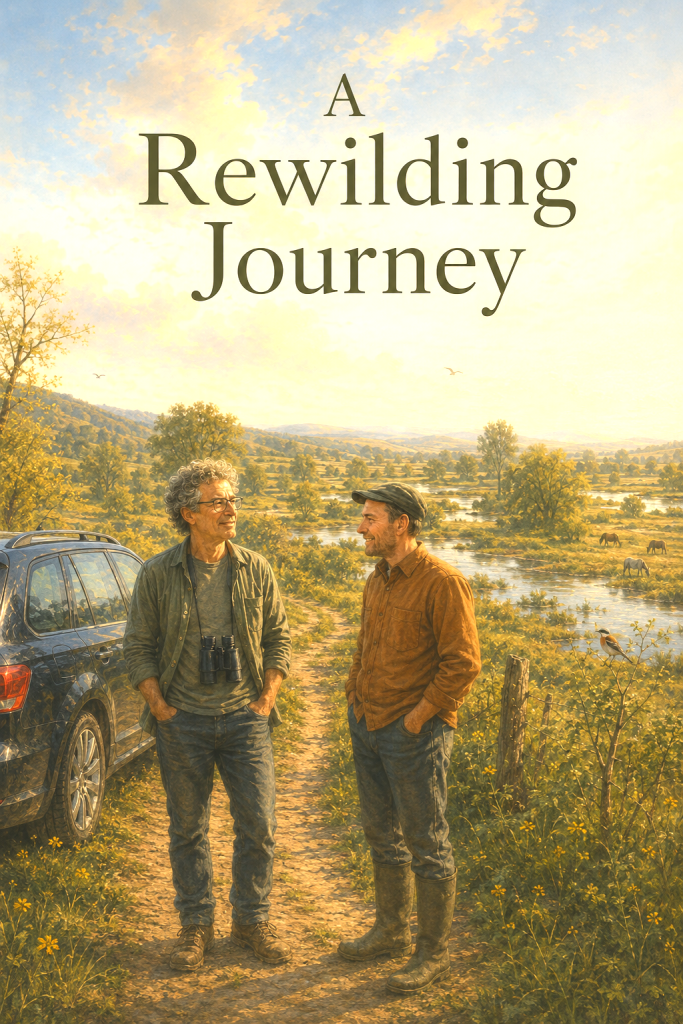
A Rewilding Journey follows two road trips through Europe’s rewilding landscapes, exploring what rewilding might offer as a way of thinking and acting in a time of ecological, technological and social change.
Part travelogue, part intellectual journey, the book weaves together encounters with wildlife, landscapes, people and pioneering practitioners with reflections on freedom, systems thinking, technology, institutions, capital, solidarity, authenticity and collective action.
Travelling from the floodplains of the Netherlands through the wetlands and forests of Central and Eastern Europe to the steppes of Spain, I trace the historical origins of rewilding ideas and explore how a today’s rewilders are restoring natural processes and experimenting with new ways of living and working with nature. Along the way, I examine how landscapes are shaped by interacting ecological, economic, cultural and political forces, and how these relationships create both constraints and possibilities for change.
At the heart of the book is the idea that rewilding offers more than a set of conservation practices. It offers a practical philosophy for engaging with complexity and change:: attending to relationships rather than isolated components, restoring the conditions for autonomy and emergence, working pragmatically with uncertainty, and building collective capacity for recovery.
The book asks what it might mean to think and act like a rewilder, and whether rewilding thought can contribute to the wider task of shaping a thriving, regenerative society.
The project is currently in progress.
Rewilding: The Radical New Science of Ecological Recovery
Icon Books, 2020 | Illustrated Edition, 2021
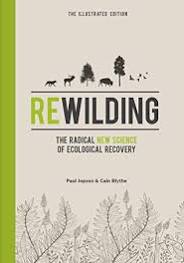
I was invited to write Rewilding in 2018, at a moment when the term was beginning to enter both professional and public consciousness. There was growing interest, but also confusion, and I felt that conservation practitioners, students, and engaged citizens would welcome an accessible account of the science, ideas, and pioneering projects underpinning the approach.
By that point, I had spent over a decade researching, teaching, and debating rewilding, and working closely with many of the scientists and practitioners shaping the field. Translating this body of work into clear, accessible language proved more demanding than expected.
The process sharpened my understanding of several core concepts, revealed new connections between ideas, and deepened my appreciation of rewilding as a systems-oriented approach rather than a fixed model.
The book was published in Icon’s Hot Topics series and later picked up by MIT Press, who proposed an illustrated edition. Working with a graphic designer to translate systems ecology into visual schematics further deepened my thinking, forcing another round of conceptual clarification. The illustrated edition was extensively edited and has since been published in French, Dutch, and Spanish.
Conservation: A Beginner’s Guide
One World, 2010
(with Richard Ladle)
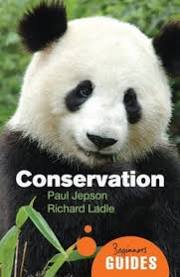
Three motivations lay behind this book. The first was a simple observation: visitor centre bookshops and general bookstores lacked a clear, readable introduction to contemporary conservation thinking for the interested public. The second was the recognition that many people working in conservation organisations now come from outside traditional conservation backgrounds and might welcome an accessible overview. The third was a desire to make some of the core ideas we taught on the MSc in Biodiversity, Conservation and Management available to a wider audience.
The book distilled the themes, debates, and ‘hobby horses’ of that course into around 50,000 words. Inevitably, choices had to be made about what to include and what to leave out, but the aim was clarity rather than completeness. We were mildly deflated when the publisher chose a panda for the cover, but by that point we were already onto other projects — and couldn’t think of a better alternative!
Birding Indonesia: A Birdwatcher’s Guide to the World’s Largest Archipelago
Periplus Editions
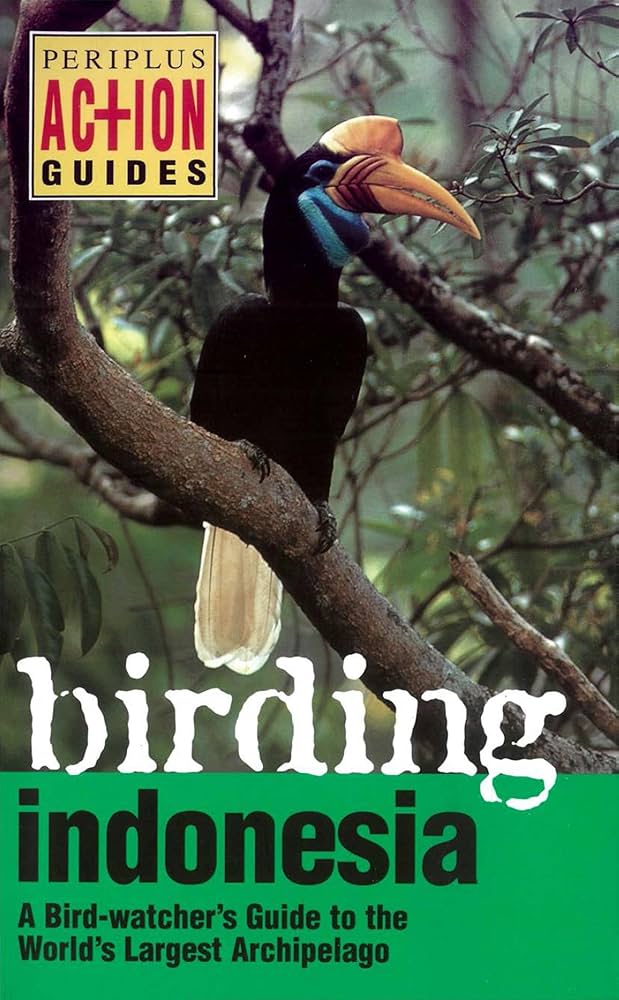
I lived and worked in Indonesia during the 1990s, a period when much of my work involved frequent internal travel. Airport bookshops stocked an appealing series of Periplus travel guides, including Diving Indonesia and it struck me that the country deserved a comparable birding guide. I pitched the idea to the publisher, who accepted it.
Writing and editing the book was a joy. At the time, very few birders knew Indonesia well, and most of the contributors were friends and colleagues whom I invited to write chapters on regions they knew intimately. The result was a collection of photo essays exploring Indonesia’s birds, their conservation, cultural significance, and key birding destinations, alongside practical travel advice.
We were all very proud of the book. though when it appeared alongside Surfing Indonesia, it became clear that birding, and birders, would never quite be as cool!